

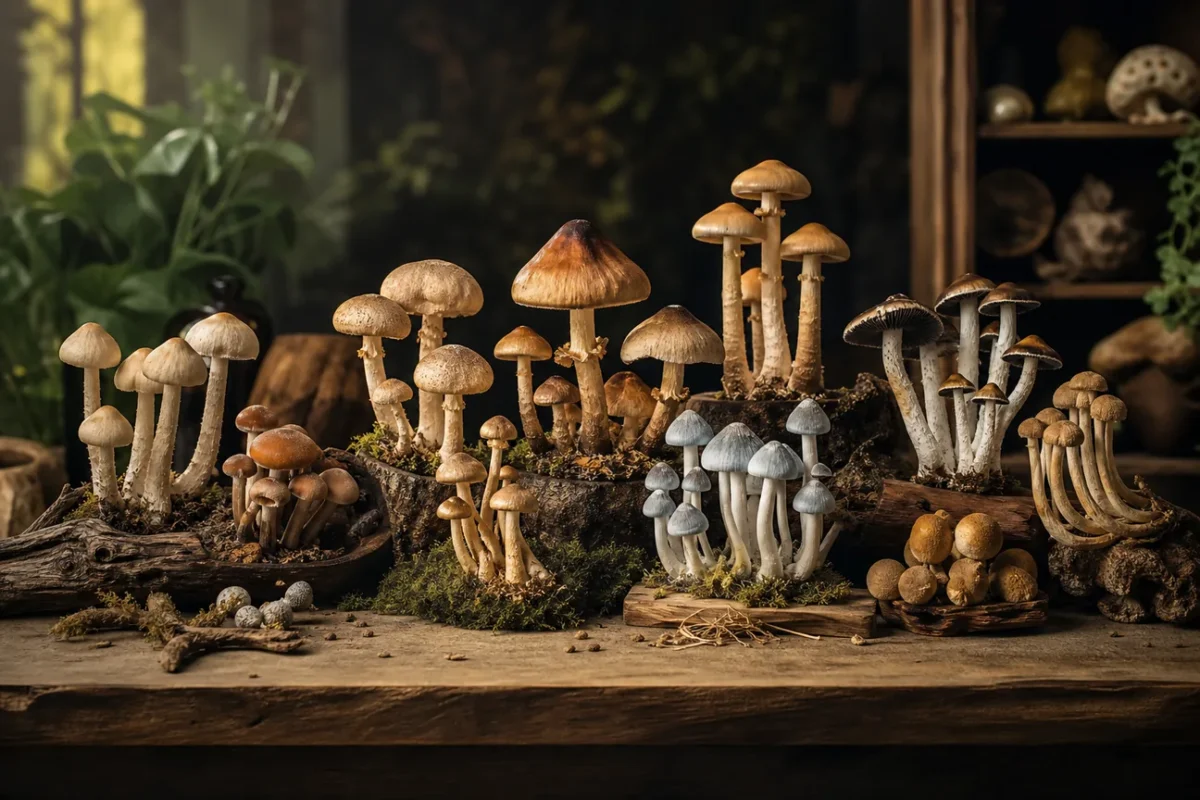
Psilocybin is the natural compound that makes magic mushrooms psychoactive. It has been used in ceremonies for centuries, and today it is one of the most studied psychedelics in medical research. This guide explains what psilocybin is, how it works in the body, what psilocybin effects feel like, and what you should know about safety and the law in Europe and around the world.
This article is for general information only. It is not medical advice, and psilocybin is illegal in many countries.
What Is Psilocybin?
Psilocybin is a naturally occurring tryptamine, a type of compound related to the brain chemical serotonin. More than 100 species of fungi contain it, most of them in the genus Psilocybe. Well-known examples include Psilocybe cubensis, which is widely cultivated, and the liberty cap, Psilocybe semilanceata, which grows wild across much of Europe.
The Swiss chemist Albert Hofmann first isolated psilocybin in 1958 while working at Sandoz in Basel. Soon afterward, his team also produced it synthetically. Today, clinical trials usually use pure, synthetic psilocybin, while magic mushrooms contain varying natural amounts. For the full background, read our history of magic mushrooms.
How It Works in the Body
Psilocybin itself is a "prodrug." In other words, the body first converts it into psilocin, and psilocin is what acts on the brain. Psilocin binds mainly to serotonin 5-HT2A receptors, especially in areas involved in perception, mood and self-reflection.
A 2019 brain-imaging study from Copenhagen showed that the intensity of the experience closely matched how many of these receptors psilocin occupied. This helps explain why psilocybin effects increase with the dose. For a deeper look at what happens in the brain, see our guide to psilocybin and the brain.
What Do Psilocybin Effects Feel Like?
Psilocybin effects vary a lot from person to person. They depend on the dose, the potency of the mushrooms, and a person's mindset and environment. Common effects include:
- Changes in perception: brighter colors, patterns and a changed sense of time.
- Emotional changes: joy, wonder or calm, but sometimes anxiety or sadness.
- Changes in thinking: new perspectives, unusual connections and a sense of insight.
- A changed sense of self: at higher doses, some people feel that the usual boundary between self and world fades.
- Physical effects: nausea, yawning, dilated pupils and a mild rise in heart rate and blood pressure. See our guide to psilocybin and the heart.
According to the European Union Drugs Agency, true hallucinations are actually rare. Instead, most people experience distortions of perception while staying aware that the substance causes them.
How Long Do Psilocybin Effects Last?
When taken by mouth, effects usually begin within 20 to 60 minutes. They tend to peak after one to two hours and fade over four to six hours in total. Our guide to how long psilocybin lasts covers the timeline in detail. Afterward, many people feel tired but calm, and some notice changes in mood for days or weeks. Our magic mushroom dosage guide explains how timing and intensity change with the amount taken.
Safety and Risks
Compared with many other drugs, psilocybin has low physical toxicity and a low risk of addiction. Tolerance also builds very quickly, so repeated use on consecutive days has much weaker effects, as our article on psilocybin tolerance explains. Nevertheless, psilocybin is not risk-free. The main risks include:
- Difficult experiences: fear, panic or confusion, which can lead to risky behavior. Read our guide to handling a bad trip.
- Mental health risks: people with a personal or family history of psychosis or bipolar disorder may be more vulnerable.
- Drug interactions: combining psilocybin with lithium has been linked to seizures. Many antidepressants can also weaken its effects (see psilocybin and antidepressants).
- Misidentification: some poisonous wild mushrooms look similar to psilocybin species, and mistakes can be fatal.
- Impairment: never drive or operate machinery while under the influence.
A calm, familiar environment and a sober, trusted companion lower many of these risks. Learn more in our guide to set and setting.
Psilocybin Effects in Research and Therapy
Since the early 2000s, researchers in Europe, North America and Australia have studied psilocybin for depression, anxiety and addiction, and even for cluster headaches. Early results are promising, but larger trials are still under way. In addition, small doses are popular for microdosing, although the evidence for that practice is weaker. To learn more, read our guides to psilocybin therapy and microdosing magic mushrooms.
Legal Status in Europe and Beyond
The 1971 UN Convention on Psychotropic Substances lists psilocybin in Schedule I. As a result, it is illegal in most European countries and much of the world. However, national rules on mushrooms, truffles and possession differ widely. For example, the Netherlands allows the sale of magic truffles, while Portugal treats possession of small amounts as an administrative offense. For details, read our guide to psilocybin legality in Europe and around the world.
Frequently Asked Questions
Is psilocybin the same as magic mushrooms?
Not exactly. Psilocybin is the active compound, while magic mushrooms are the fungi that contain it, along with related compounds such as psilocin and baeocystin.
Is it addictive?
Psilocybin is not considered physically addictive, and tolerance builds so fast that daily use quickly stops working. Still, any substance can be misused.
Does it show up on drug tests?
Standard drug tests usually do not look for psilocybin, but specialized tests can detect it for a short time after use. Read more in our guide to the psilocybin drug test.
Conclusion: Understanding Psilocybin Effects
Psilocybin is a natural compound found in more than 100 species of mushrooms. In the body, it turns into psilocin, which acts on serotonin receptors and changes perception, mood and thinking. Psilocybin effects usually last four to six hours, and the risks are mainly psychological rather than physical. Because research is moving fast and laws differ from country to country, stay informed, start low and always follow the law where you live.